
The aviation sector is undergoing a profound transformation. With global air travel demand projected to reach 25 billion annual passengers by 2052, the industry’s focus has shifted from growth alone to sustainable growth, balancing connectivity and net-zero ambitions. Within this context, multilateral development banks (MDBs) play a pivotal role in mitigating risks, fostering innovation and mobilizing capital and expertise for aviation.
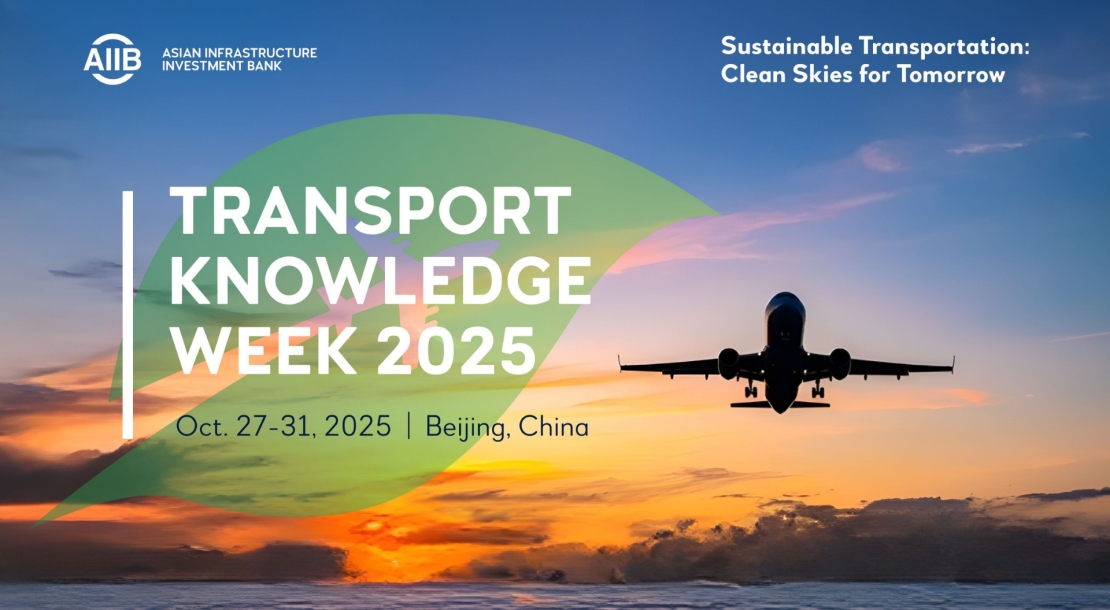
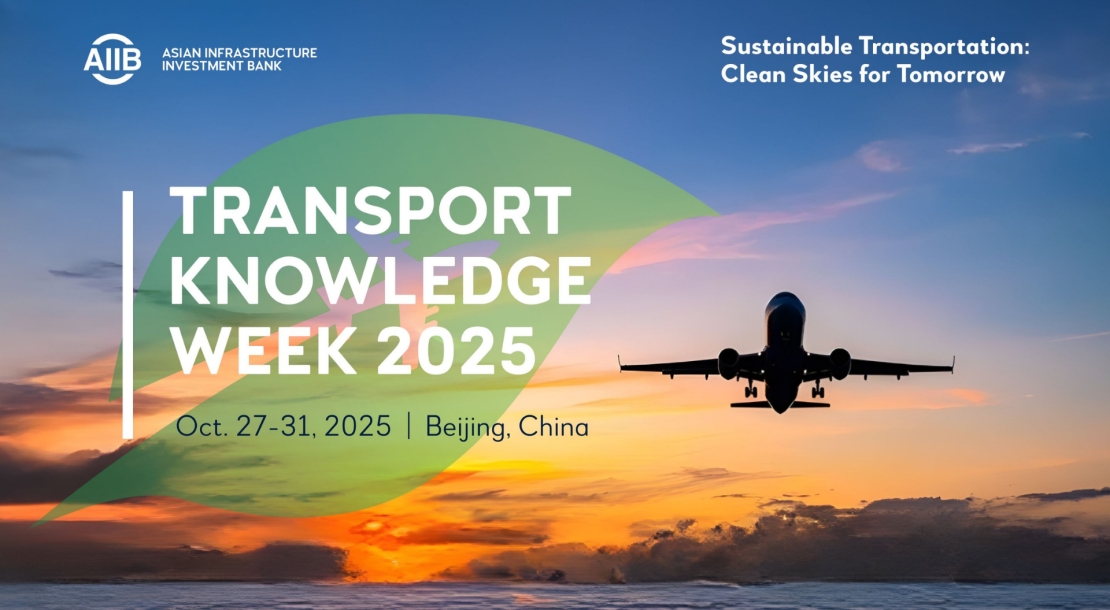
This understanding was reflected in the Asian Infrastructure Investment Bank’s (AIIB) Transport Knowledge Week 2025, themed “Sustainable Transportation: Clean Skies for Tomorrow” (Oct. 27-31, 2025). Through a mix of workshops and site visits, the event aimed to advance a more efficient, green, connected and integrated aviation ecosystem by fostering meaningful dialogue among stakeholders and identifying emerging trends, challenges and opportunities shaping the sector’s future.
Over 20 speakers and 20 participants from airlines, airports and aviation authorities from 13 AIIB members participated in the event. A wealth of in-depth insights and case studies was shared by experts from policy, industry, financing and research. These insights highlighted the need for harmonization in standard-setting for sustainable aviation fuel to achieve net-zero CO2 emissions by 2025. They also highlighted projections indicating that advanced air mobility, a new business model in aviation that features electric air taxis and low-altitude economy, will generate over 7,000 jobs in the next 20 years. Case studies such as the Hong Kong International Airport’s Sky Pier Terminal and autonomous-vehicle corridors indicated the shift toward multimodal connectivity enabled by smart mobility.
The case study of the Kunming Changshui Airport, which received four stars – the highest possible rating among all airports in China in the 2024 Dual Carbon Airport evaluation by the China Civil Airports Association – showed how international standards and global expertise enabled the AIIB project to set new sustainability benchmarks. Beyond financing the Kunming Changshui Airport’s expansion and green development, AIIB developed a comprehensive green airport assessment framework integrating local and international standards, proposed tailored decarbonization action plans and advocated for gender inclusivity throughout the project.
Two other AIIB-financed aviation projects in Thailand and China were discussed at the event workshops and amplified AIIB’s sustained efforts in mobilizing expertise, transferring knowledge and building capacity. Other MDBs, such as the World Bank Group, the European Bank for Reconstruction and Development, and the New Development Bank, together with their partners and clients, also showcased their financing and projects in aviation.
Participants also visited sites such as the state-of-the-art Beijing Daxing International Airport, the Chengdu Tianfu International Airport, the Chengdu Eastern New District, the Comprehensive Bonded Zone, and the Cargo Terminal of the Tianfu Airport. The visits demonstrated that as aviation continues to serve as a catalyst for connectivity and economic growth across industries, the associated infrastructure needs to be thoughtfully integrated into broader industrial, urban and national development strategies. The discussions and insights following the site visits also underscored that airports are not isolated transport hubs but strategic enablers of sustainable growth and regional cohesion. Integration is key.
Through the event, AIIB aimed to provide a knowledge-sharing platform for aviation stakeholders, enabling participants to gain insights relevant to their varied national contexts and development priorities, be it in terminal design and best practices, engaging with MDBs for airport financing or innovative solutions to achieve sustainable aviation. AIIB also called for immediate efforts to build smart aviation infrastructure for tomorrow – one that expands access jobs, essential services, new markets and regional and global cooperation, while safeguarding the planet we all share.
Transportation is at the heart of AIIB’s mission, accounting for 20% of its investment portfolio, with total approved financing of USD14.7 billion across 19 economies as of writing. Consequently, AIIB remains committed to investing in aviation infrastructure that enhances connectivity, strengthens regional cooperation and delivers shared prosperity, while advancing a forward-looking vision grounded in climate resilience and sustainability.