
Wetlands are critical natural water infrastructures. They act as biodiversity hotspots, critical sinks for carbon sequestration, and essential regulators of the global water cycle. From buffering communities against the ravages of floods and droughts to sustaining complex food webs, the ecosystem services provided by global wetlands are estimated to be worth a staggering USD39 trillion per year.
Yet despite their immense value, these socio-ecological systems are in a state of crisis. Since 1970, approximately 400 million hectares of wetlands have been lost globally.
To combat this decline, the international community has leaned heavily on International Environmental Agreements (IEAs), most notably the 1971 Ramsar Convention on Wetlands. By 2024, 2,535 wetlands had been designated as “Ramsar sites,” a title intended to ensure their conservation and “wise use.” Recent research in the AIIB Asian Infrastructure Finance report (2026) utilizes geospatial data and causal analysis to reveal that Ramsar designation often has a limited impact on the ground, raising urgent questions about how we govern our most precious water resources.
The core promise of the Ramsar Convention is that by designating a site of “International Importance,” a country commits to maintaining its ecological character through integrated planning and management. However, data show a persistent downward trend in wetland health even after designation.
Between 1995 and 2018, Ramsar-designated sites worldwide lost nearly 2,000 km² of permanent water and over 10,000 km² of forested areas. Agricultural land expansion within these protected sites has grown by nearly 20,000 km², while urban settlements are also expanding rapidly. This suggests that wetlands are often treated as common-pool resources that are rival but non-excludable, making them incredibly difficult to manage across different layers of governance.
The decline in wetland health is uneven across regions (Figure 1). Africa and Asia account for the largest surface water losses (about 1,300 km² and 800 km², respectively), while Latin America experienced the greatest forest loss – around 10,000 km² – mainly converted to agriculture. Africa also saw the largest vegetation decline (nearly 15,000 km²), and urban expansion has been a common pressure across regions, particularly in Africa and Asia. These patterns underscore both shared global pressures and the decisive role of local land‑use dynamics.
Figure 1. Land Cover Changes in Ramsar Sites Across Regions (1995-2018)

Impacts of Ramsar Designation on Wetland Health
The analysis shows that Ramsar designation has had limited overall impact on wetland health, in line with the literature on the effectiveness of IEAs. Its effectiveness varies widely, delivering measurable gains mainly in higher-income countries and those with stronger governance and institutional capacity, while weaker contexts often see little improvement or continued degradation.
The effectiveness of Ramsar is not universal but rather moderated by local institutional quality and financial capacity. Indeed, several studies also highlight the importance of institutions in ensuring outcomes related to common-pool resources.
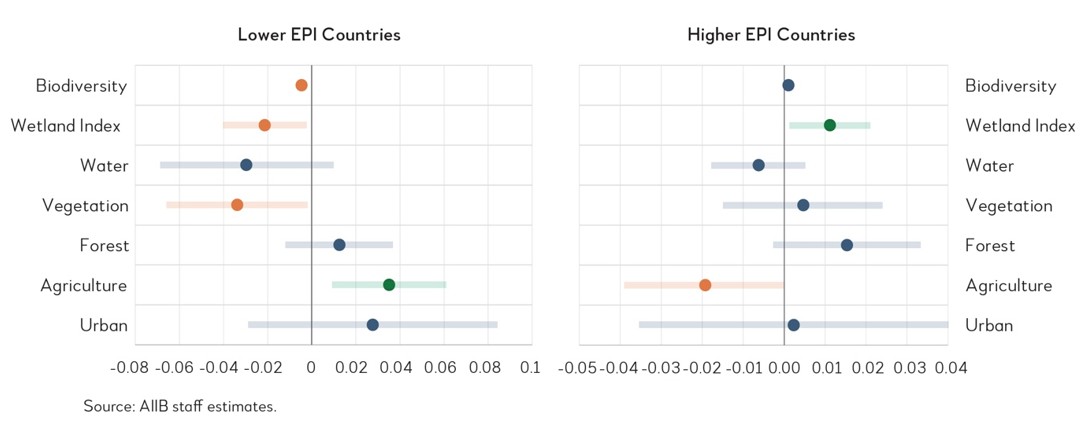
- Environmental performance: Countries that rank above the global median in the Environmental Performance Index (EPI) see measurable improvements in wetland health after Ramsar designation. In contrast, countries with low EPI scores – often lacking the regulatory capacity to enforce conservation – frequently see their wetlands deteriorate due to agricultural pressures and enforcement gaps.
Figure 2: Ramsar Treatment Effects by EPI Levels
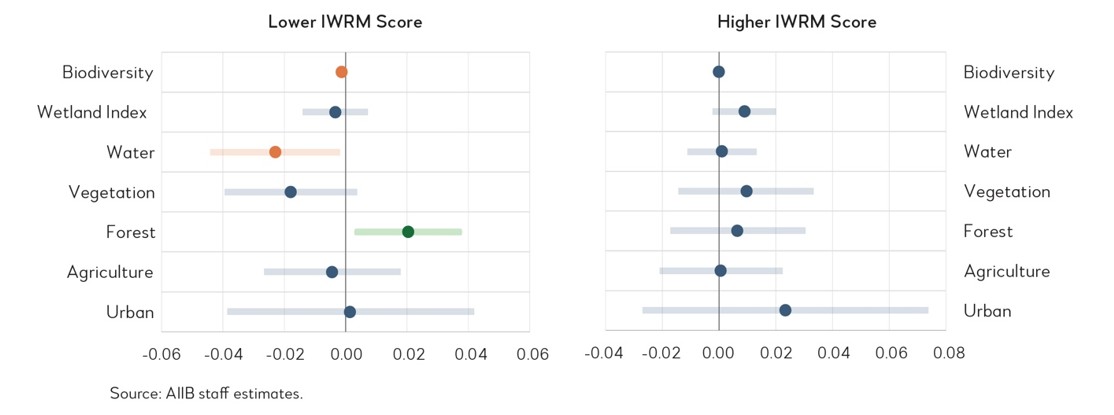
- Water management: Integrated Water Resources Management (IWRM) is a critical predictor of success. In countries with weak water governance structures, Ramsar designation actually correlates with a decrease in water extent. This highlights that without strong local water-management institutions, international commitments remain symbolic.
Figure 3: Ramsar Treatment Effects by IWRM Score
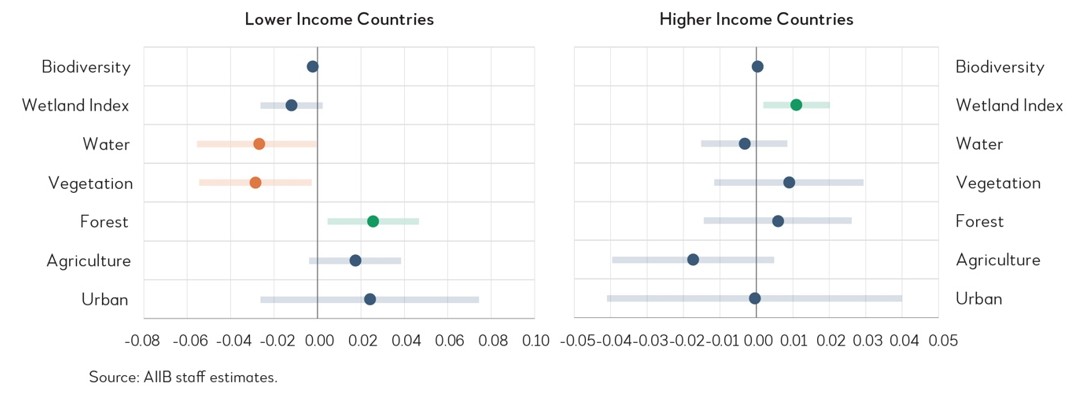
- National income: Financial resources are inextricably linked to conservation outcomes. High-income countries can leverage Ramsar status for eco-tourism and sustainable development, while low-income nations often face a “negative net impact” because they lack the funds for monitoring or to provide alternative livelihoods for those relying on wetland resources.
Figure 4: Ramsar Treatment Effects by Countries’ Income Level
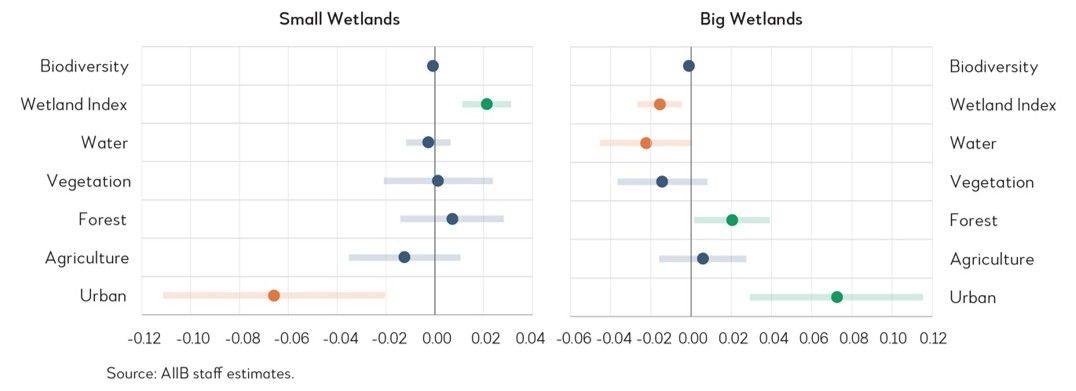
- The question of scale: Interestingly, smaller wetlands benefit more from Ramsar designation than larger ones. Smaller sites are easier to monitor, have fewer competing land-use conflicts, and require lower restoration costs. Larger wetlands often span multiple jurisdictions, making enforcement complex and leading to “symbolic” rather than “tangible” implementation.
Figure 5: Ramsar Treatment Effects by Wetland Size
To transform the Ramsar Convention into a functional tool for conservation, we make three policy suggestions:
- Strengthen local institutions: IEAs must be paired with direct investments in local governance transparency and enforcement mechanisms. An international treaty is only as strong as the local regulator tasked with its oversight.
- Bridge the financial divide: Develop innovative financing mechanisms that incentivize countries to invest in wetland conservation and restoration, such as Payment for Ecosystem Services, blended finance models and Public-Private Partnerships for Nature. These approaches can help offset the opportunity costs associated with protection.
- Align multi-level governance: Global objectives must be embedded in national legislation and operationalized through local, community-based organizations. Success often depends on effective devolution to the communal level, ensuring those who live alongside the wetlands have a stake in their protection.
The Ramsar Convention remains a vital ecological foundation for global water and biodiversity, but it is not a silver bullet. The evidence is clear: international commitments alone are insufficient. To truly protect our natural water infrastructure, we must look beyond designation and focus on the hard work of building robust local institutions, securing innovative financing and evolving our legal systems to recognize the inherent rights of the natural world. Only then can we ensure that these multifunctional ecosystems continue to sustain life for generations to come.
This blog post builds on the findings of Chapter 7, “Protecting Wetlands,” in the 2026 Asian Infrastructure Finance Report (pages 61-72). For further details, the full report is available here.