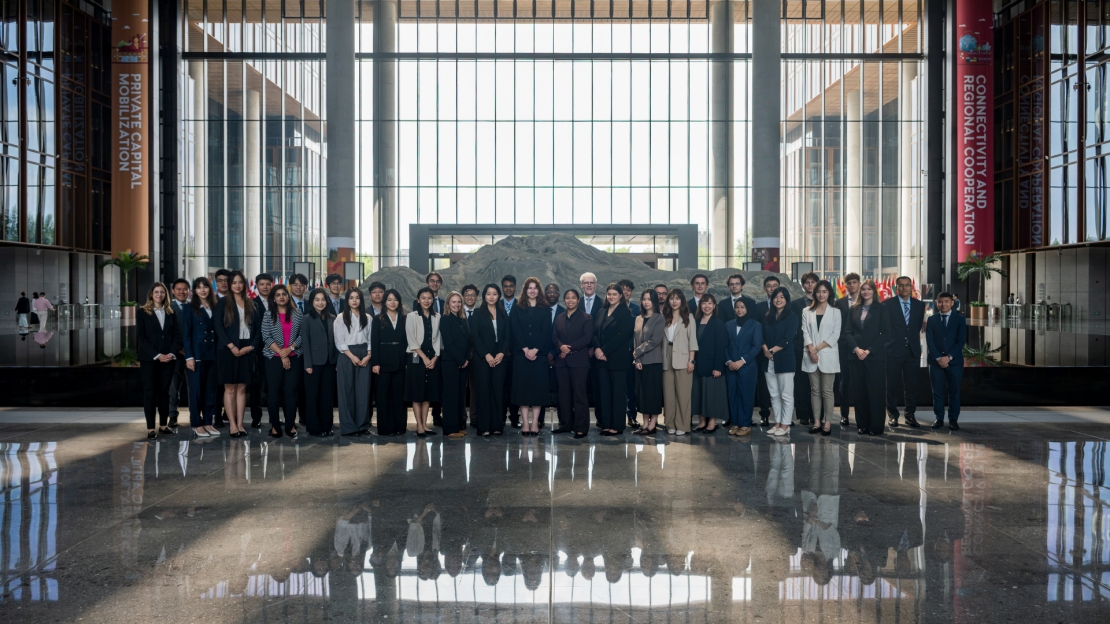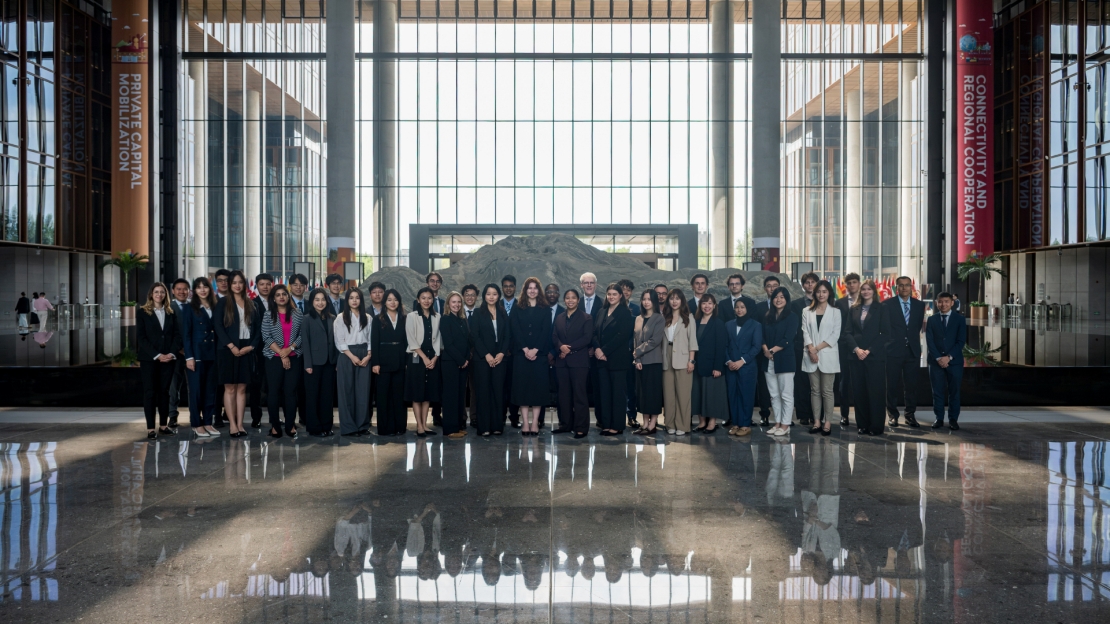
Our Global Internship Program just had its biggest year. We received 14,352 applications from 158 economies for 38 internship positions – our largest applicant pool since the program launched in 2018, and a clear sign that interest in AIIB’s Young Talent Programs keeps growing.
The Global Internship Program is part of AIIB’s broader Young Talent Programs. Whereas the Graduate Program and the Legal Associate Program are full-time roles for early career professionals, the Global Internship Program is aimed at students who are in the middle of, or approaching the end of, their master’s or PhD studies.

Each internship runs for two months, with the option to extend for a third month. To help interns settle in and focus on their work, we provide visa application support, a USD90 daily stipend and a roundtrip economy-class flight for those joining from outside Beijing.
The program is built to complement our interns’ graduate studies. Instead of pausing their academic path, interns have the opportunity to test what they are learning through real infrastructure and development finance work. They work on actual projects that complement what they are studying in the classroom. Each intern is assigned a time-bound project tied to their host department’s priorities, and at the end of the internship they present their completed work to the department. Our Learning & Organizational Effectiveness team also runs an orientation program and training courses throughout the internship, so interns leave not only with a completed deliverable but also a stronger professional toolkit to take back to their studies.
 |
 |
As Kaisu Christie, Vice President, Chief Administration Officer and Acting Director General, Human Resources Department, said: “AIIB serves members across very different economies, at very different stages of development, and our staff need to understand that range, not just read about it. When our intern cohort spans 22 economies and five continents, we are not just diversifying a headcount. These are young people who have grown up seeing firsthand how differently infrastructure gaps show up depending on where you live. That is not something you can teach in a classroom.”
Vincent Nicolier, Head of Learning & Organizational Effectiveness, spoke to what the program offers interns beyond the workplace itself: “It is as much a learning journey as it is a working assignment. Interns are given real projects with real deadlines, but they are also supported to reflect on what they are learning, connect it to their academic work, and build professional skills and connections that do not show up in a syllabus. That combination of structured work and intentional learning is what makes the experience valuable long after the internship ends.”
For Scott Fitzgerald, Head of Talent Acquisition, the program’s value goes beyond the summer months: “We see the program as one of our most important pipelines for future talent at the Bank. Getting these students exposed to what we actually do here – the projects, the people, the mission – matters. Even if most of them go on to build their careers elsewhere in development finance, that is still a win. But a number of our former interns have come back and joined AIIB through the Graduate Program, and we want to see that number growing.”
As this year’s interns complete their assignments, we are proud of what this cohort represents: not just our biggest applicant pool to date but also our most diverse group of interns yet, united by a shared interest in what infrastructure and development finance can do in the world.
AIIB’s Talent Acquisition team welcomes universities and professional association networks interested in partnering with us on outreach activities with graduate students to introduce them to AIIB. Please reach out to Brian Carlo Hipolito, Senior HR Officer, at brian.hipolito@aiib.org.