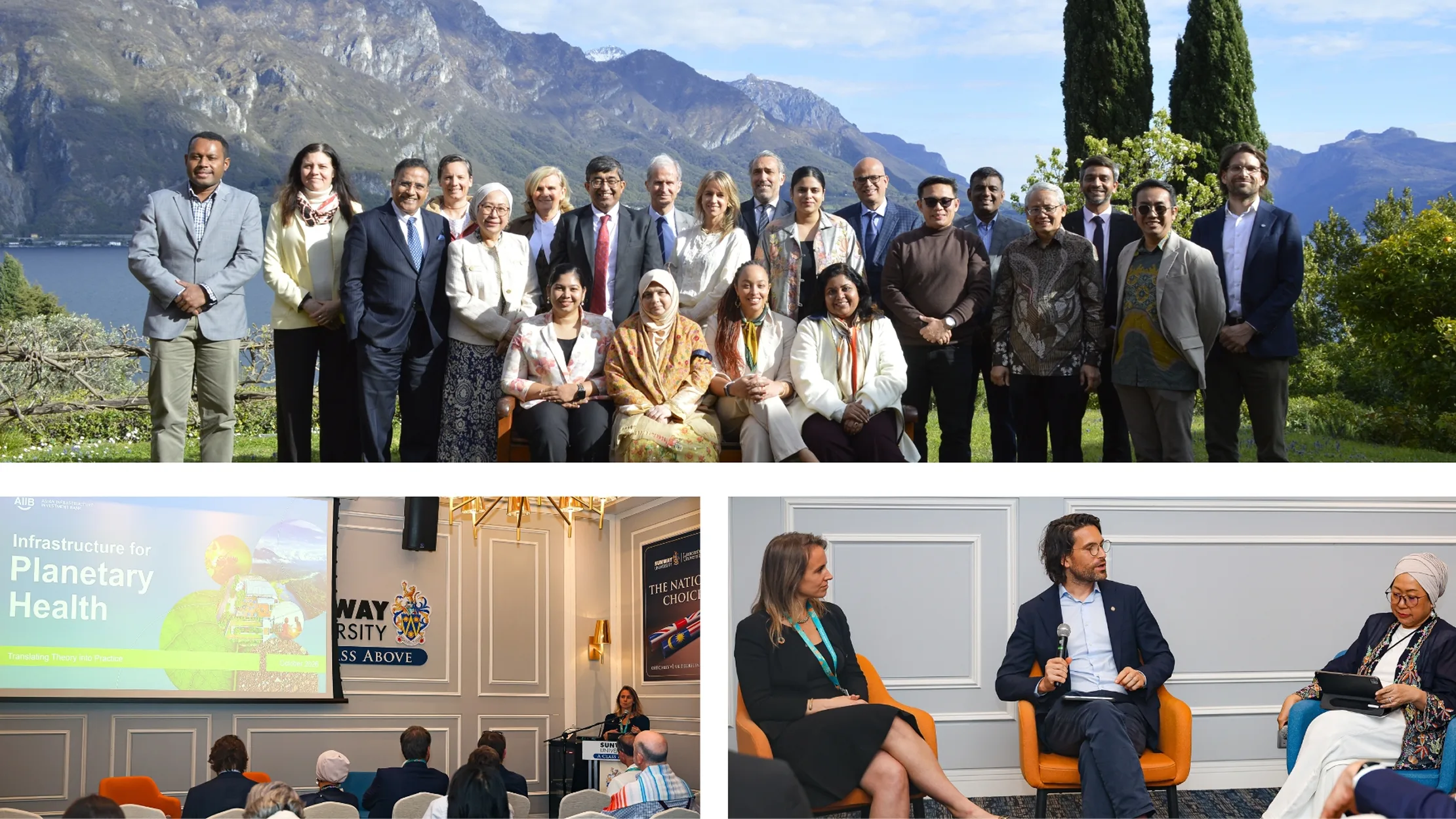
The Asian Infrastructure Investment Bank’s (AIIB) new Infrastructure for Planetary Health Report 2026: Translating Theory into Practice, launched at the Global Tipping Points Conference in Kuala Lumpur, explores how infrastructure can move beyond individual assets to become a systemic lever for protecting ecosystems, tackling climate change and improving human health.
For AIIB, integrating planetary health into infrastructure investment is central to shaping the infrastructure of tomorrow. Decisions made today can influence environmental conditions, climate resilience and public health for decades. The challenge is to ensure investments deliver essential services while strengthening the natural systems on which people and economies depend.
Hosted in Asia for the first time, the conference brought together scientists, policymakers, business leaders, sector experts and changemakers to discuss how positive tipping points can accelerate climate action and improve human health. Our report contributes by identifying priorities for integrating planetary health into infrastructure planning, strengthening cross-sectoral governance and coordination and mobilizing financing for resilient, nature-positive infrastructure.
Today’s infrastructure decisions can do one of two things. They can lock in vulnerabilities – or they can strengthen resilience, making health an essential consideration in infrastructure governance and investment. Our report identifies two mutually reinforcing pathways for action:
- Nature-positive infrastructure: Treating ecosystems such as forests, wetlands and watersheds as productive infrastructure assets that deliver environmental and societal benefits.
- Climate-adaptive and climate-mitigating infrastructure: Reducing emissions, climate risks and exposure to environmental hazards while strengthening resilience across core infrastructure systems, including energy, water, transport and health.
Together, these pathways provide a framework for considering not only the services infrastructure delivers but also its wider effects. Those can include ecosystems, climate resilience and human well-being. Realizing the potential requires translating the principles into practical decisions about how infrastructure is planned, designed and financed.
Our report sets out recommendations for governments and multilateral development banks to embed planetary health across the infrastructure investment cycle:
- Treat nature as a productive asset class, recognizing the economic value of ecosystems such as forests, wetlands and mangroves
- Build climate resilience and health into infrastructure from the outset, rather than treating them as additional benefits once projects have been designed
- Mobilize public and private capital for planetary health, including by integrating nature finance into mainstream banking and investment frameworks
- Expand results-based and policy-based financing to link funding to measurable climate, health and resilience outcomes
- Combine nature-based and traditional infrastructure, including green-grey approaches to areas such as flood protection, water and urban development
- Embed resilience into health infrastructure strategy, including protection against heat, flooding and other climate shocks.
Implementing these recommendations calls for collaboration across sectors and institutions. Financing approaches that recognize the interconnected benefits of healthy ecosystems, climate resilience and human well-being will be needed as well.
For AIIB, we see opportunities to work with our members and partners to turn shared priorities into practical investment opportunities. Together, we can strengthen project preparation, support enabling policy frameworks and explore approaches that help align infrastructure development, climate resilience and nature-positive outcomes. These efforts can help build a stronger pipeline of sustainable infrastructure projects and open new avenues for partnership.
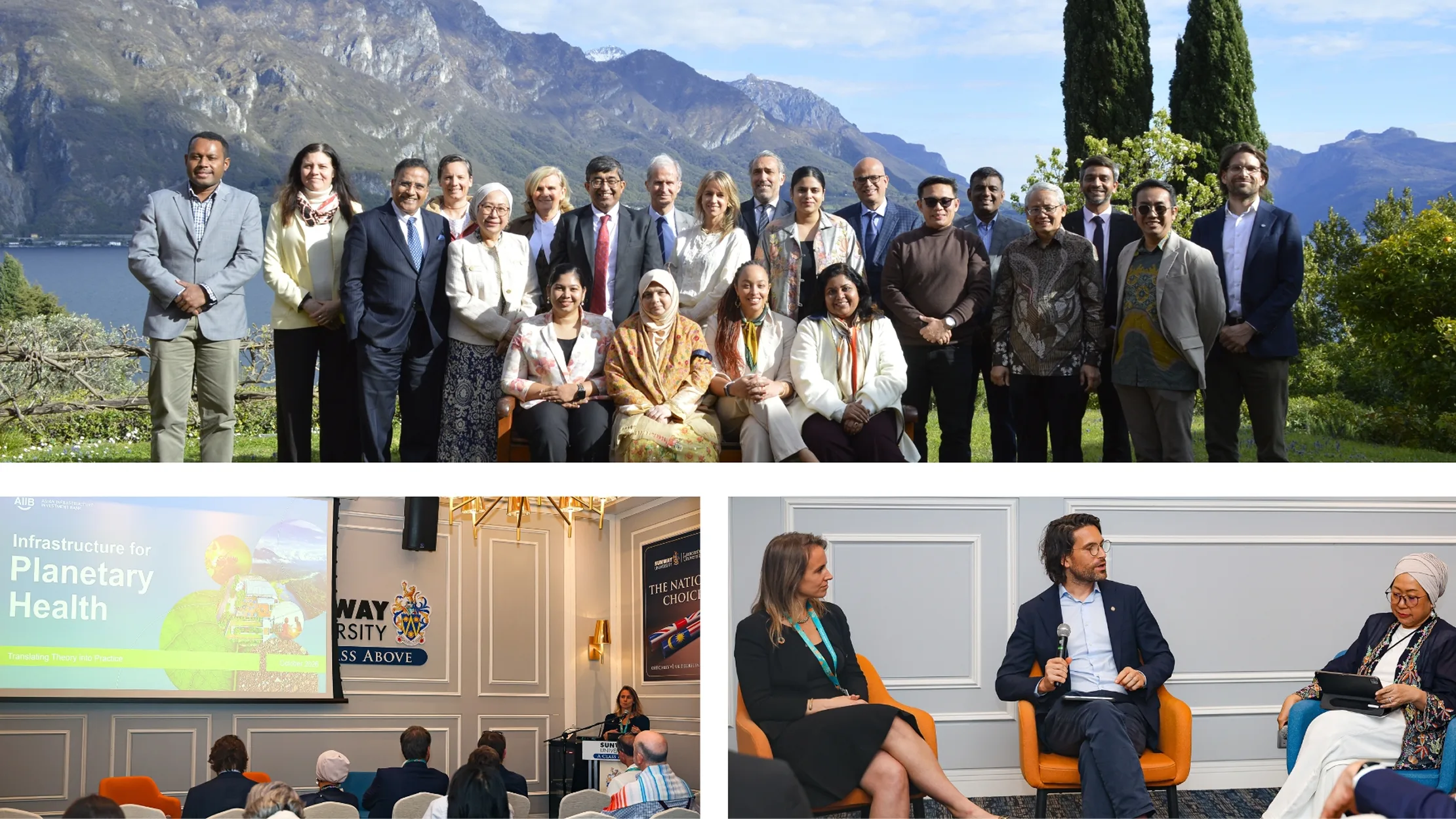
Our report builds on discussions last March at the Bellagio Convening, where AIIB, with support from the Rockefeller Foundation, brought together government officials from Bangladesh, Brazil, Fiji, India, Indonesia, Malaysia and Sri Lanka alongside experts from the World Health Organization (WHO), the United Nations Development Programme (UNDP) and Center for International Forestry Research (CIFOR) and the International Center for Research in Agroforestry (ICRAF) and the Sunway Centre for Planetary Health to explore how infrastructure can preserve, promote and regenerate planetary health.
Insights from the report point to a simple truth: planetary health is not an abstract ambition. It is a design choice, shaped by the decisions we make about what to build, where to invest and how to govern the systems on which we depend.
Infrastructure has always shaped the future. Our opportunity now is to ensure that it does so in ways that protect and regenerate the foundations of health, prosperity and life on Earth.