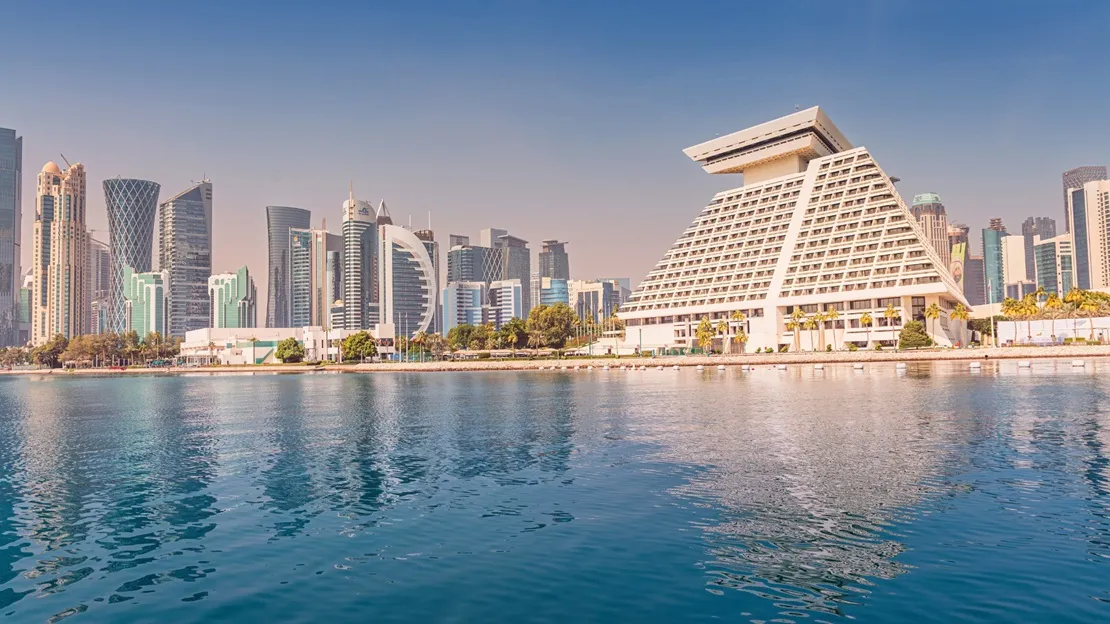

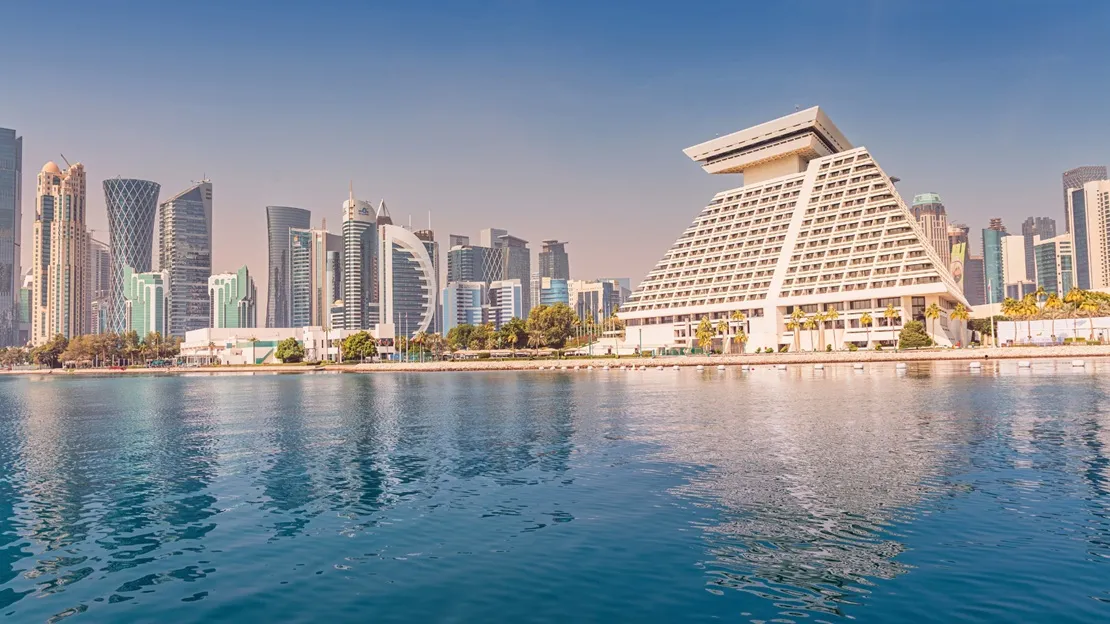
On Sep. 28-29, the Asian Infrastructure Investment Bank (AIIB) will hold our 11th Annual Meeting in Doha, Qatar. It is a time for AIIB to take stock of our progress, listen to our shareholders and consider the direction ahead. This year’s meeting comes as the Bank enters our second decade. It is an opportunity not only to reflect on a decade of growth, but also to consider how to build on that foundation to meet the changing needs of members.
The theme, “Tomorrow’s Infrastructure: Impact and Innovation,” captures both continuity and change. Over our first decade, AIIB has established a strong foundation as a multilateral development bank focused on financing green, technology-enabled and connected infrastructure across Asia and beyond. The next phase will build on that experience while responding to members’ changing development needs and a more demanding global financing environment. This means combining the discipline of what works with the ambition to find better ways to finance, structure and deliver infrastructure that creates lasting development impact.
The Annual Meeting will provide an opportunity for the Board of Governors to share their perspectives on these priorities. Their views and guidance will be important in shaping the next phase of AIIB’s development and ensuring that the Bank remains responsive, relevant and effective in a changing world.
From delivery to greater impact
The past year has demonstrated what can be achieved through strong partnerships and a growing range of financing instruments.
In 2025, AIIB approved USD10.6 billion in financing across 57 projects, with 71% of approved financing supporting climate-positive outcomes. The Bank also mobilized USD4.48 billion in private capital, while cross-border connectivity financing reached USD2.8 billion.
These results were accompanied by developments in the Bank’s institutional and policy framework. We updated our corporate strategy following a midterm review, setting a forward-looking framework for the Bank’s growth through 2030 while maintaining strong commitments to climate action, connectivity, private capital mobilization and development impact.
AIIB also continued to broaden the ways in which we support members. Climate-focused policy-based financing expanded significantly, with USD1.9 billion approved in 2025, including operations in Brazil, Uzbekistan and Bangladesh. At the same time, the Bank strengthened work with private-sector clients and partners, using our balance sheet and a wider range of instruments to help make infrastructure more investable and mobilize additional capital.
This progress can be seen across Asia and beyond, covering both physical and social infrastructure.
In Asia, AIIB supported a range of investments that reflect the breadth of this approach. In Indonesia, we approved financing for the development of three national referral hospitals, combining modern health infrastructure with digital systems, green building features and climate-resilient design. In India, AIIB supported renewable energy access through off-grid solar pumps for farmers, while in Uzbekistan it invested in battery energy storage to strengthen grid stability and support the integration of renewable energy. In Thailand, AIIB’s financing for the expansion of U-Tapao International Airport helped mobilize private capital through a long-term public-private partnership and strengthen regional connectivity.
AIIB’s work also continued to expand across its nonregional members. In Benin, AIIB signed a USD200 million loan to enhance the public transport system, its first operation in the country. In Brazil, AIIB approved a USD1 billion Climate-Focused Policy-Based Financing (CPBF) loan to support the country’s Ecological Transformation Plan and advance its Nationally Determined Contributions, marking the Bank’s first CPBF operation in the country.
These projects differ in scale, geography and sector, but share a common purpose: help members address real development needs through financing and infrastructure that is sustainable, resilient and fit for the future.
A program focused on the challenges ahead
The Public Program will give participants an opportunity to explore many of these issues.
The flagship seminar will examine how to turn policy reform into resilient growth by scaling up climate finance for impact. It will bring together perspectives from governments, investors, development institutions and other partners, with discussion focused on practical lessons for translating climate commitments into bankable and resilient investments.
Other seminars will explore issues that are central to AIIB’s work, including regional connectivity, digital public infrastructure, private capital mobilization and gender-responsive infrastructure.
These topics are closely connected. Better regional connectivity can open markets and strengthen resilience. Digital infrastructure can improve services and create new opportunities, but it also requires sound institutions and investment models. And mobilizing private capital will be essential to help close the infrastructure financing gap.
The Annual Meeting therefore provides an opportunity to consider these issues together and examine how different approaches can contribute to infrastructure investment and development outcomes.
Listening, learning and looking ahead
The Annual Meeting is also an opportunity to listen.
Governors represent the members AIIB serves, and their priorities, experience and expectations are important to shaping the Bank’s work. At the same time, the Annual Meeting brings together clients, partners, investors, civil society and other stakeholders whose perspectives can help deepen understanding of what is changing on the ground.
Exchange and collaboration are also central to addressing infrastructure challenges. Partnerships with governments, other multilateral development banks, the private sector and wider society will continue to support the delivery of infrastructure and development solutions.
AIIB looks forward to welcoming governors, members, partners and other participants to Doha for discussions on the infrastructure and development priorities ahead, and on how the Bank can work with its members and partners to address them.